

Different Types of Financial Statements
Engagements

By Cavel Koert | SAIPA
Key Relationship Manager
Cavel has a National Higher Certificate and National Diploma in Accounting and a BTech in Internal Auditing. She is also part of SAIPA.
|
Different Types of Financial Statement Engagements |
|
Many times, clients refer to a set of financial statements as an ‘’audit’’, however there are three levels of financial statement engagements. The three methods we as accountants use to analyse the financial statements has three different reports. The differences are outlined below: Compilation: A compilation is the most basic engagement and provides no assurance on the accuracy of the financial statements. The financials are compiled by using information gathered from existing information. A compilation is usually less costly compared to an independent review and audit. Independent review: Independent reviews provides limited assurance where the practitioner performs primarily inquiry and analytical procedures to obtain sufficient appropriate evidence as the basis for a conclusion on the financial statements. Audit: An audit provides reasonable assurance that the financial statements are represented fairly and free from material misstatements. An audit is a more thorough process, usually commencing with interviews with the CEO and senior executives. The auditor must corroborate the ending balances of client accounts and disclosures. To do this, the auditor must cross-check against source documents, perform tests of internal controls, third party investigations and other processes outlined in the International Standards on Auditing (ISA). Let’s look at how to determine what type of engagement an organisation needs; an engagement can be either determined by legislation or the companies MOI (memorandum of incorporation). Legislation will always override the MOI if the MOI suggests a lower level of engagement than that of a legislation. How legislation determines engagement types: Private companies that are owner managed (all directors and shareholders are the same)
Private company that is not owner managed
Public interest scores (PI) are determined as follows:
In conclusion type of engagement will be determined by the company’s MOI or the PI score, but the PI score will always take higher preference over the MOI. |
From The Desk Of The Practice Manager

By Dewald Niemand
Practice Manager
CHANGING OF ACCOUNTING SOFTWARE
Northbound has recently migrated from Sage One Accounting to Xero Accounting. The new product offers some exciting new tools and we are looking forward to sharing some of these with our clients in the near future.

Saying Goodbye to Charmaine Vermeulen
Charmain has decided to move on to new pastures and she will be sadly missed. She started with the company eight years ago and as such was a veteran through all the early turbulence before Northbound settled into its current organised and stable self.
From 1 November 2022 Adeleen Botha will join our team. We welcome her to the Northbound family.
New Online Traveller Declaration
|

By Laverne Geswint | GTP – (SA) SAIT
General Tax Practitioner South Africa
Laverne has more than 18 years experience as a tax practitioner with a BCOMPT in Accounting Science, majoring in Taxation (UNISA). She also has a Postgraduate Diploma in Taxation (UNISA) and is part of SAIT.
|
Keeping South Africa’s Lights
Switched ON.

By Cornel Gouws | CA (SA)
Key Relationship Manager
Cornel has a B Com (Rationum) in Accounting & Business Management and a B Com ( Hons) in Accounting. He is also part of CA (SA) and SAICA.
Section 12B provides for a capital allowance for movable assets used in the production of renewable energy. More specifically, it allows for a deduction equal to 100% basis i.r.o. any plant or machinery brought into use in a year of assessment for the first time and used in a process of manufacture or any other process which is of a similar nature. It is important to note that the allowance is only available if the asset is brought into use for the first time by the taxpayer. In other words, the allowance is not limited to new or unused assets. The wording merely prevents the taxpayer from claiming the section 12B allowance twice on the same asset.
What does this mean for your company? Currently, company tax in South-Africa is 28%. With this incentive, you can deduct the value of your renewable energy system from your company’s profits in the year of installation. This means that your company’s taxable income will be decreased by the same value as the value of the installed solar system. In effect it is the same as getting a 28% reduction on the price of your solar system.
With this incentive, it makes the financial model of a commercial roof-top, grid-tied, solar power system look very attractive.

On the 8th of December 2020 it became mandatory for accounting officers and building owners to display and submit an Energy Performance Certificate (EPC) for their building, with an effective end date of December 2022. Failure to publicly display the EPC is in contravention of the Act (Act No. 34 of 2008) (Department of Mineral Resources and Energy, 2020: 3).
Energy Performance Certificates for buildings indicates how much energy is being used to operate a building. The energy performance of the building is based on measured energy consumption and is compared to the maximum energy consumption provided for in SANS 10400 XA:2021.
According to the Regulation, all specified data used to determine the EPC and a certified electronic copy of the EPC must be submitted to the South African National Energy Development Institute (SANEDI) and will be uploaded to the National Building Energy Performance Register (NBEPR). The energy performance of a building is measured in terms of kilowatt-hours per square metre of net floor area, per annum (kWh/m2/pa) in accordance with SANS 1544:2014.
Visit the SANEDI website here for more info,
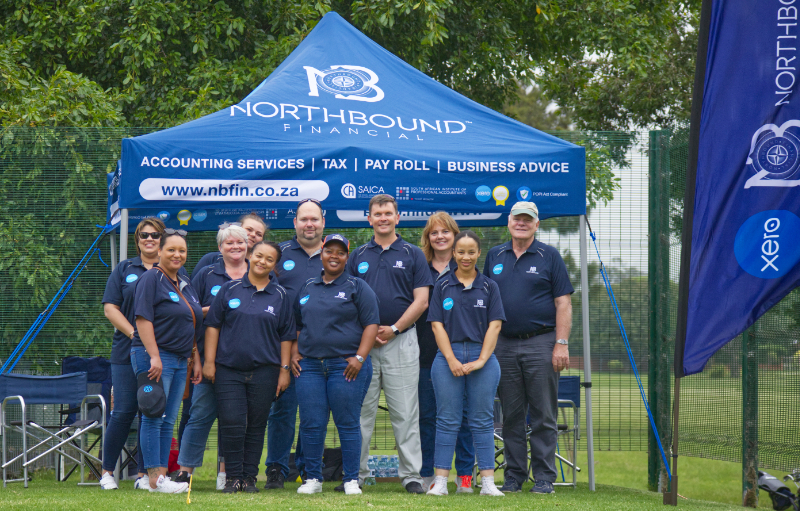
St John’s Anglican Church Centre of Concern Golf Day
Northbound was one of the sponsors of the St John’s Anglican Church Centre of Concern Golf Day Fundraiser, about two weeks ago. This community outreach group does amazing work with the needy. See their website here: Centre of Concern – St John’s Anglican Church.
All of the Northbound staff were in attendance (only one, Cornel, was brave enough to actually play!) and not only was there a good opportunity to engage with clients but it was also a great team building exercise.
Recent Comments